
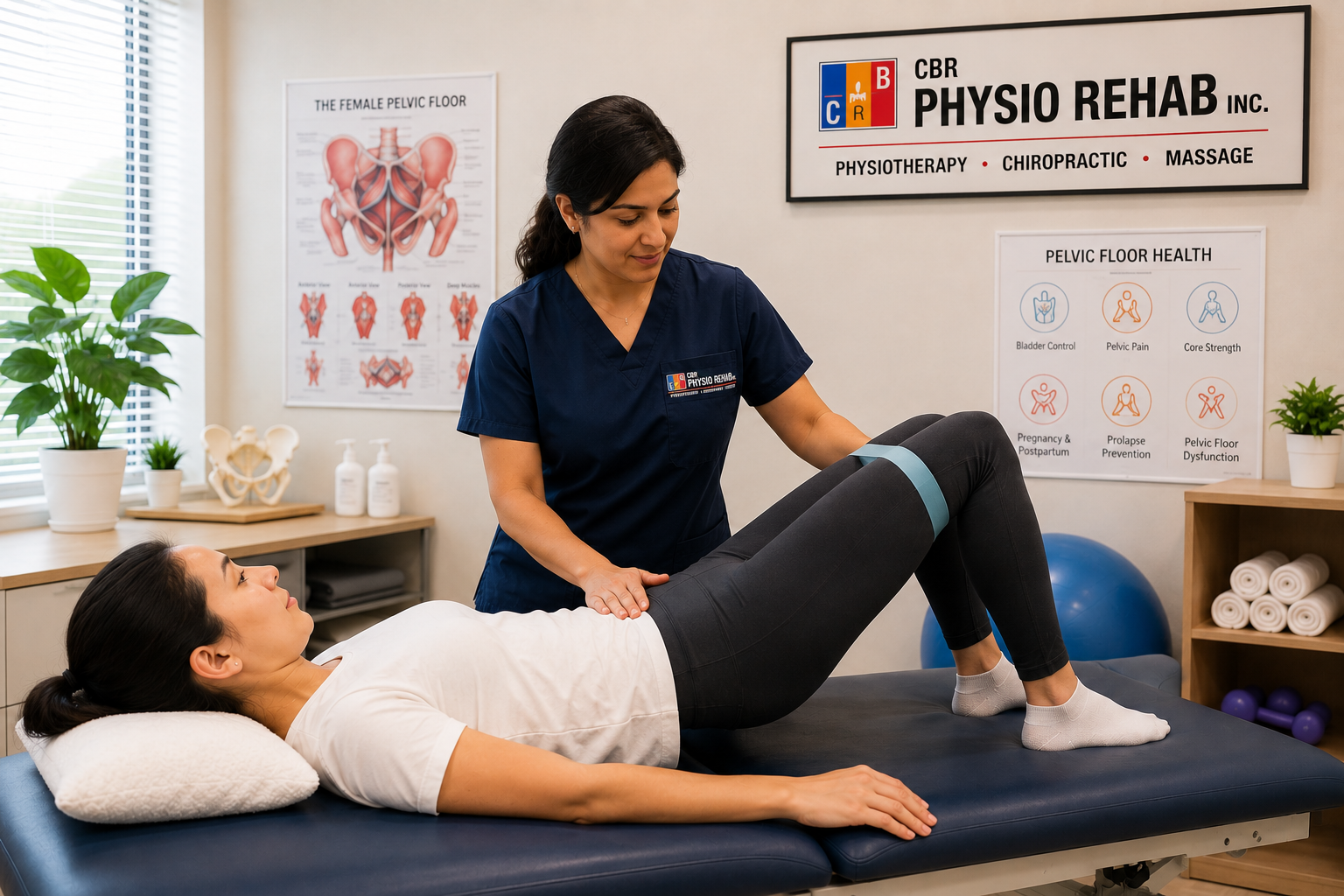
Tailored to your needs
Pelvic floor physiotherapy focuses on the group of muscles at the base of the pelvis. These muscles support the bladder and bowel, stabilize your core and play a role in movement, posture and comfort.
Treatment can strengthen or relax these muscles, improving bladder and bowel control, reducing pelvic pain, supporting postpartum recovery and helping to prevent pelvic organ prolapse. The result for many people is a better quality of life, whether you are a man, a woman or a child.
Pelvic health is a common concern, and you do not have to manage it alone. Our approach is private, respectful and paced to your comfort. It is also part of our wider physiotherapy services, and you can meet our team before you book.
If you recognize any of these, an assessment is a good first step.
Leaking when you cough, sneeze, laugh or exercise, or a frequent and urgent need to go.
Constipation, straining or difficulty with bowel control.
Ongoing pain in the pelvis, lower abdomen or lower back, including pain linked to muscle tension.
Pelvic, hip and lower back discomfort, and preparing your body for birth.
Rebuilding core and pelvic floor strength after childbirth.
A feeling of heaviness or pressure, and prevention of pelvic organ prolapse.
Physiotherapy is a non-invasive approach. Every plan is highly individualized, and the techniques we use depend on your condition and goals.
A thorough first visit: we discuss your medical history, symptoms and goals, then perform physical examinations and tests to assess the function and strength of your pelvic floor muscles.
We explain the anatomy of the pelvic floor, what these muscles do and how habits or conditions affect them, so you understand your body and your plan.
Pelvic floor exercises, often called Kegels, taught correctly to strengthen and coordinate the muscles, plus exercises for any related imbalances or weakness.
Hands-on techniques where appropriate to release muscle tension, improve circulation and target trigger points in and around the pelvic floor.
Visual or audio feedback on muscle activity helps you learn to contract and relax your pelvic floor more effectively.
Breathing patterns and posture strongly influence pelvic floor function. We teach you simple ways to support it throughout the day.
Practical advice on diet, fluid intake and toileting habits, which can make a real difference for bladder and bowel concerns.
A personalized program to continue your exercises and self-care between visits.
We track your progress and adjust your plan as needed, so you keep moving toward your goals.
Clear steps, no surprises, and you stay in control.
Complete our patient intake form so we can focus your visit on you.
We talk through your symptoms, history and goals in a private setting.
Your physiotherapist explains which assessment methods are useful for you and proceeds only with your consent.
You receive a plan, a clear explanation and your first exercises to start at home.
Many extended health plans cover physiotherapy. We offer direct billing and can help you check your limits and any pre-authorization needs.
Add other services to your plan, or read our health blog.
Exercise-based rehabilitation to rebuild strength and movement.
Spinal and joint care for back pain and mobility.
Including prenatal massage to ease the aches of pregnancy.
Rehabilitation in the comfort of your home.
Another option for pain relief and relaxation.
Find the right care for your symptoms.
Need more help? Call 905-457-0234 or visit our full FAQ page.
It is a non-invasive form of physiotherapy that focuses on the group of muscles at the base of the pelvis. Treatment strengthens or relaxes these muscles to improve bladder and bowel control, core stability and pelvic health, and to reduce pelvic pain.
Men, women and children can benefit. Common reasons include bladder or bowel concerns, pelvic pain, pregnancy-related discomfort, postpartum recovery and prevention of pelvic organ prolapse.
Your physiotherapist reviews your medical history, symptoms and goals, then performs an assessment of your pelvic floor and surrounding muscles. They explain what they find and agree a plan with you. Your comfort comes first, and you can ask questions or pause at any time.
Not always. Your physiotherapist will explain which assessment methods are useful in your case and why, and will only proceed with your informed consent. You are always in control of what happens during your session.
No. You can book directly with a physiotherapist without a doctor’s referral. Some insurance plans have their own requirements, so check your plan or ask our team.
Kegels are a core part of treatment, but not the whole story. Some people need to relax their pelvic floor rather than strengthen it. Your physiotherapist will check how your muscles work and teach you the right exercises.
It depends on your condition, how long you have had symptoms and how you respond. Your physiotherapist will outline an expected timeline after your assessment and adjust it as you progress.
Yes. It can ease pregnancy-related pelvic and back discomfort and support recovery after childbirth by rebuilding core and pelvic floor strength. Let us know where you are in pregnancy or postpartum so we can tailor your care.
Many extended health plans cover physiotherapy. Check your coverage limits and any pre-authorization requirements. We offer direct billing and can help you verify your coverage.
Comfortable, loose clothing that allows easy movement. Your physiotherapist will explain each step and respect your privacy throughout.
Yes. Many patients combine pelvic floor care with general physiotherapy, massage therapy or chiropractic care. Having these services in one clinic helps your care work together.
Book a private assessment with our physiotherapy team in Brampton. We confirm your appointment within one business day.
WhatsApp us